
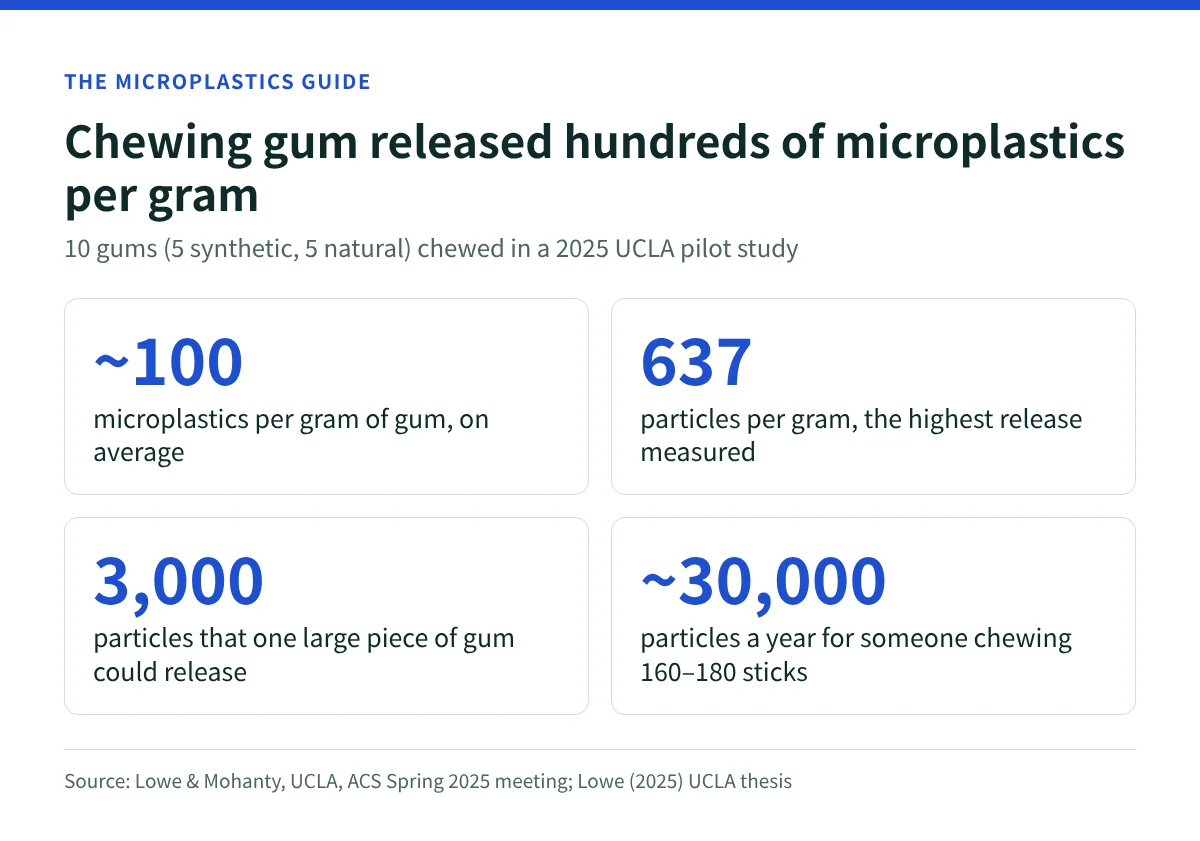
Yes, chewing gum can shed microplastics into your saliva. A 2025 UCLA pilot study found an average of about 100 particles per gram of gum, and up to 637 per gram. Natural and synthetic gums released similar amounts. For other food sources, see our food and kitchen guide.
How many microplastics does chewing gum release?
The study was led by Sanjay Mohanty, an engineering professor at UCLA. Graduate student Lisa Lowe presented it at the American Chemical Society spring meeting in March 2025. One person chewed 10 gums: five synthetic and five natural brands, seven pieces of each.
On average, each gram of gum released about 100 microplastics, and some pieces released up to 600 per gram. Lowe's 2025 UCLA master's thesis gives the exact peak as 637 particles per gram.
A typical piece of gum weighs 2 to 6 grams, so one large piece could release up to 3,000 particles. The researchers estimated that a person chewing 160 to 180 small sticks a year could swallow around 30,000 microplastics from gum.
For scale, the same release notes that scientists estimate people take in tens of thousands of microplastics a year from food, drinks and packaging. Gum could add noticeably to that for regular chewers.
Is chewing gum made of plastic?
Many gums are. The chewy part is called gum base. In the US, the FDA lists the synthetic materials allowed in gum base under 21 CFR 172.615. They include polyethylene, polyvinyl acetate, butyl rubber, polyisobutylene and butadiene-styrene rubber.
Ingredient labels usually just say "gum base," so you cannot tell which polymers a gum uses. Natural gums use plant polymers such as chicle or other tree sap instead.
Do natural gums have fewer microplastics?
Not in this study. Natural gums released about 96 particles per gram and synthetic gums about 104. The difference was not statistically significant.
The team had expected synthetic gum to release more. The particles in both types were the same main plastics: polyolefins, PET, polyacrylamides and polystyrenes. Polyolefins, the family that includes polyethylene, were the most common.
| What was measured | Result (UCLA, 2025) |
|---|---|
| Gums tested | 10 (5 synthetic, 5 natural) |
| Average release | About 100 particles per gram |
| Highest release | 637 particles per gram |
| Natural vs. synthetic | About 96 vs. 104 per gram; no significant difference |
| Smallest particles counted | 20 micrometers wide |
When does gum release the most particles?
Early on. Saliva was sampled every 30 seconds during four minutes of chewing. According to ScienceDaily's summary of the ACS release, most particles came off within the first two minutes.
Mohanty said the particles come from the grinding action of chewing, not from saliva enzymes breaking the gum down. That is why the researchers suggest chewing one piece longer rather than starting fresh pieces.
How strong is the evidence?
Emerging. This is a small pilot study. One person chewed all the gum, and the work was presented at a conference rather than in a peer-reviewed journal. The thesis says a journal paper was under review.
The method only counted particles 20 micrometers wide or larger, so smaller nanoplastics were missed. The thesis also reports two different figures for how much was released in the first eight minutes, 94% and 52%. Counts from different labs are hard to compare; our article on what the 2025–2026 brain studies show explains why.
Emerging on health. The researchers say the health effects of these particles are not known. No study has shown that microplastics from gum harm people.
Should you stop chewing gum?
You do not need to panic. Gum is one of many small sources, much like microplastics in salt. Sugar-free gum also has a benefit: the American Dental Association says chewing sugarless gum for 20 minutes after meals can help prevent tooth decay.
If you want fewer particles:
- Chew one piece longer instead of several pieces in a row.
- Chew less often, if gum is a daily habit.
- Do not pay extra for "natural" gum just to avoid plastic; it released similar amounts here.
- Throw gum in the trash, not on the street, as Mohanty also urged.
- Start with bigger changes, such as not heating food in plastic. Our list of changes that matter most ranks them.
There is no proven way to remove microplastics already in the body.
Frequently asked questions
Does swallowing gum mean swallowing plastic?
Many gums use synthetic polymers such as polyethylene or polyvinyl acetate in the gum base, so a swallowed piece contains plastic. The UCLA study measured particles shed into saliva while chewing, not what happens to swallowed gum.
Is natural chicle gum plastic-free?
The gum base in natural gum is a plant polymer, not plastic. Yet in the 2025 UCLA study, natural gums still released about 96 microplastic particles per gram. The study did not establish where those particles came from.
Does nicotine gum or sugar-free gum release microplastics too?
The study tested 10 popular US gums but did not report results by sugar content, and it did not test nicotine gum. Any gum made with a synthetic gum base may shed particles, but this has not been measured for those products.
Keep reading
Sources
- American Chemical Society via EurekAlert! (2025): Chewing gum can shed microplastics into saliva, pilot study finds
- ScienceDaily (2025): Chewing gum can shed microplastics into saliva, pilot study finds
- Lowe L. (2025), Ingestion Risk of Microplastics from Chewing Gum, UCLA master's thesis, eScholarship
- US Code of Federal Regulations, 21 CFR 172.615: Chewing gum base
- American Dental Association, MouthHealthy: Chewing gum